Prime Highlights
A recent market analysis has outlined a structured approach for investors to identify growth stocks with sustainable competitive advantages, shifting the focus from short-term momentum to long-term value creation. The report emphasizes durability of business models, pricing power, and innovation as the key filters for selecting high-quality growth companies.
As markets face periodic volatility, analysts note that companies with strong moats tend to outperform over longer investment cycles, offering resilience during downturns and compounding returns during expansions.
Key Facts
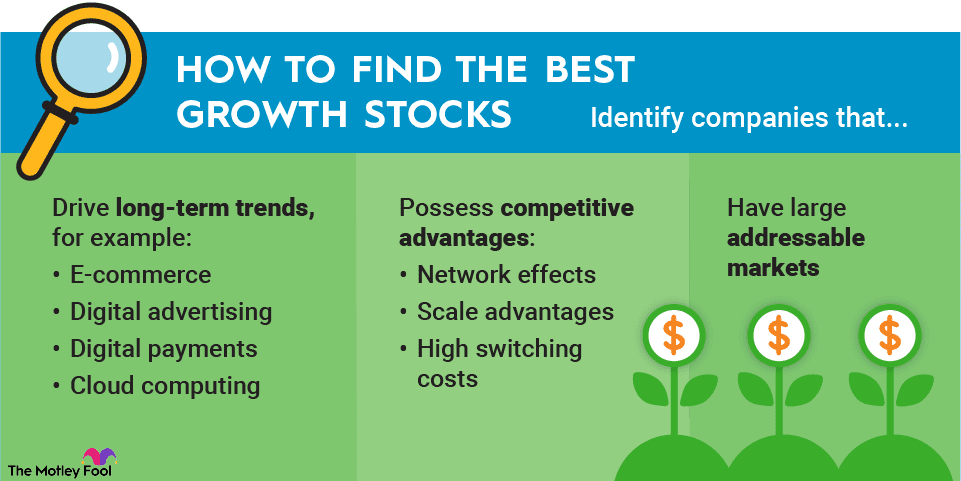
The analysis highlights economic moats such as brand strength, network effects, switching costs, and proprietary technology.
Consistent revenue growth, high return on capital employed, and strong free cash flow are cited as core financial indicators.
Management quality and capital allocation discipline are identified as equally important as financial metrics.
Background
Growth investing has evolved significantly over the past decade. Earlier cycles rewarded rapid expansion at almost any cost, particularly in technology and digital-first businesses. However, recent market corrections and rising interest rates have forced investors to re-evaluate what sustainable growth truly means.
What it Means
The analysis reinforces the idea that growth stocks are no longer judged solely on top-line expansion. Investors are increasingly prioritizing predictability, defensibility, and long-term earnings visibility.
For retail and institutional investors alike, this approach reduces reliance on market timing and places greater emphasis on business fundamentals. It also encourages patience, as companies with strong moats often compound value steadily rather than delivering immediate gains.
Prime Highlights
A recent market analysis has outlined a structured approach for investors to identify growth stocks with sustainable competitive advantages, shifting the focus from short-term momentum to long-term value creation. The report emphasizes durability of business models, pricing power, and innovation as the key filters for selecting high-quality growth companies.
As markets face periodic volatility, analysts note that companies with strong moats tend to outperform over longer investment cycles, offering resilience during downturns and compounding returns during expansions.
Key Facts
The analysis highlights economic moats such as brand strength, network effects, switching costs, and proprietary technology.
Consistent revenue growth, high return on capital employed, and strong free cash flow are cited as core financial indicators.
Management quality and capital allocation discipline are identified as equally important as financial metrics.
Background
Growth investing has evolved significantly over the past decade. Earlier cycles rewarded rapid expansion at almost any cost, particularly in technology and digital-first businesses. However, recent market corrections and rising interest rates have forced investors to re-evaluate what sustainable growth truly means.
This shift has renewed interest in companies that not only grow quickly but also defend their market position through structural advantages that competitors find difficult to replicate.
What it Means
The analysis reinforces the idea that growth stocks are no longer judged solely on top-line expansion. Investors are increasingly prioritizing predictability, defensibility, and long-term earnings visibility.
For retail and institutional investors alike, this approach reduces reliance on market timing and places greater emphasis on business fundamentals. It also encourages patience, as companies with strong moats often compound value steadily rather than delivering immediate gains.
Outlook & Consideration
Looking ahead, analysts expect capital to gravitate toward businesses that can demonstrate sustainable differentiation amid technological disruption and global competition. Companies that invest in innovation while maintaining operational discipline are likely to remain attractive despite market fluctuations.
Investors, however, are advised to balance conviction with caution. Even high-quality growth stocks can underperform if bought at excessive valuations or if their competitive advantage erodes over time. A disciplined, research-driven approach remains essential for capturing long-term growth opportunities.
Prime Highlights
A recent market analysis has outlined a structured approach for investors to identify growth stocks with sustainable competitive advantages, shifting the focus from short-term momentum to long-term value creation. The report emphasizes durability of business models, pricing power, and innovation as the key filters for selecting high-quality growth companies.
As markets face periodic volatility, analysts note that companies with strong moats tend to outperform over longer investment cycles, offering resilience during downturns and compounding returns during expansions.
Key Facts
The analysis highlights economic moats such as brand strength, network effects, switching costs, and proprietary technology.
Consistent revenue growth, high return on capital employed, and strong free cash flow are cited as core financial indicators.
Management quality and capital allocation discipline are identified as equally important as financial metrics.
Background
Growth investing has evolved significantly over the past decade. Earlier cycles rewarded rapid expansion at almost any cost, particularly in technology and digital-first businesses. However, recent market corrections and rising interest rates have forced investors to re-evaluate what sustainable growth truly means.
This shift has renewed interest in companies that not only grow quickly but also defend their market position through structural advantages that competitors find difficult to replicate.
What it Means
The analysis reinforces the idea that growth stocks are no longer judged solely on top-line expansion. Investors are increasingly prioritizing predictability, defensibility, and long-term earnings visibility.
For retail and institutional investors alike, this approach reduces reliance on market timing and places greater emphasis on business fundamentals. It also encourages patience, as companies with strong moats often compound value steadily rather than delivering immediate gains.
Outlook & Consideration
Looking ahead, analysts expect capital to gravitate toward businesses that can demonstrate sustainable differentiation amid technological disruption and global competition. Companies that invest in innovation while maintaining operational discipline are likely to remain attractive despite market fluctuations.
Investors, however, are advised to balance conviction with caution. Even high-quality growth stocks can underperform if bought at excessive valuations or if their competitive advantage erodes over time. A disciplined, research-driven approach remains essential for capturing long-term growth opportunities.
Outlook & Considerations
Looking ahead, analysts expect capital to gravitate toward businesses that can demonstrate sustainable differentiation amid technological disruption and global competition. Companies that invest in innovation while maintaining operational discipline are likely to remain attractive despite market fluctuations.
Investors, however, are advised to balance conviction with caution. Even high-quality growth stocks can underperform if bought at excessive valuations or if their competitive advantage erodes over time. A disciplined, research-driven approach remains essential for capturing long-term growth opportunities.
8/9
8/9
8/9
#1 Growth Signals
#1 Growth Signals
#1 Growth Signals
Author: Nikhil Ravindra
Author: Nikhil Ravindra
Author: Nikhil Ravindra
Date of writing: December 4, 2025
Date of writing: December 4, 2025
Date of writing: December 4, 2025
x
x

English
𐊾