


Prime Highlights
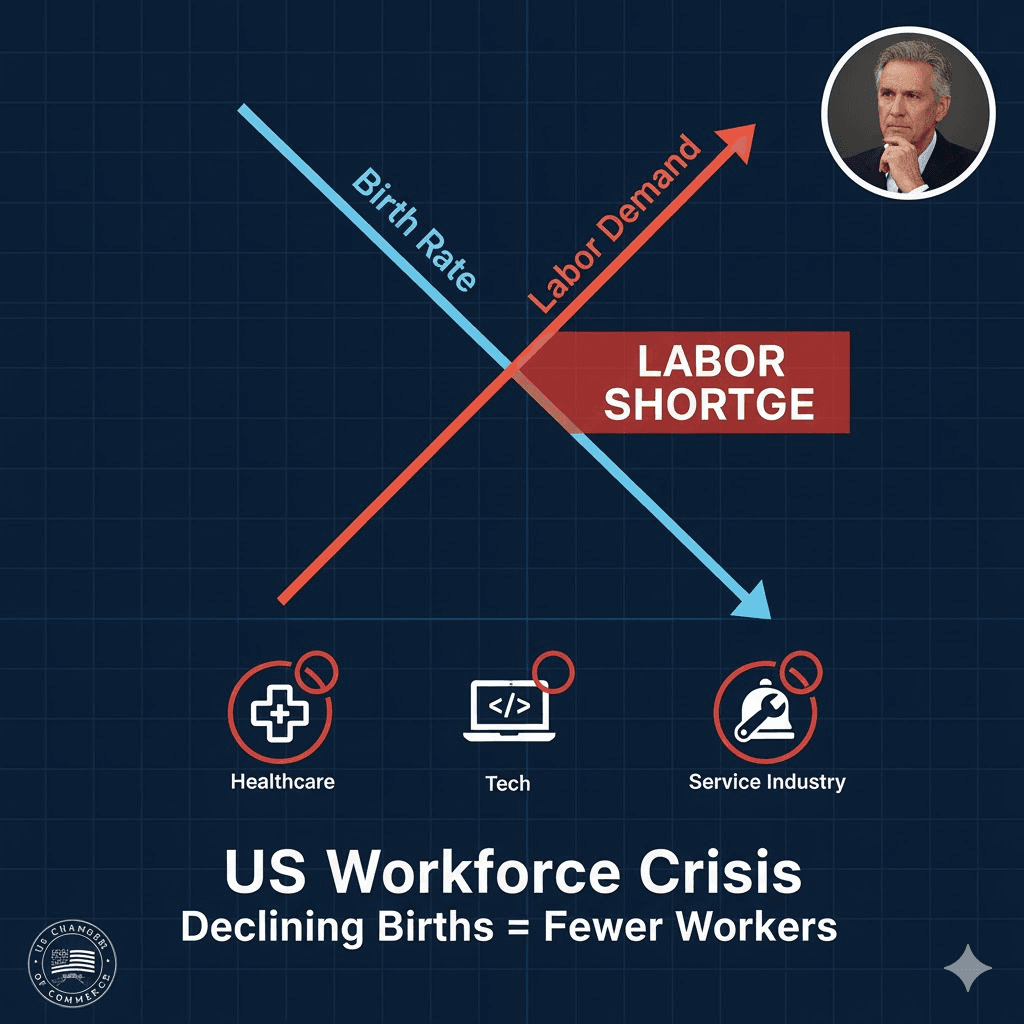
• The United States is facing a growing labor shortage driven primarily by long-term declines in birth rates.
• Businesses across sectors are struggling to fill essential roles, from manufacturing to healthcare.
• Cities and states are launching new incentives to attract workers and sustain economic growth.
• Demographic shifts are forcing companies to rethink hiring, wages, automation, and workforce policies.
Key Facts
• US birth rates have been steadily declining for more than a decade, with fertility rates now below replacement level.
• More than 9 million job openings remain unfilled nationwide, according to the latest labor data.
• Critical industries such as logistics, healthcare, construction, and hospitality are reporting severe worker shortages.
• Rural cities and mid-sized towns are experiencing the highest economic pressure due to shrinking working-age populations.
Background
The United States has been experiencing a demographic shift marked by aging populations and fewer young workers entering the workforce. This trend accelerated after the pandemic, which reshaped labor expectations, retirement patterns, and migration flows. Historically, immigration has supplemented the US labor force, but fluctuating immigration policies in recent years have reduced the inflow of new workers. Combined with lower birth rates, the result is a shrinking pool of employable talent.
What it Means
The ongoing labor shortage poses significant challenges for economic growth, business operations, and the future of American competitiveness. Employers may face rising labor costs, production delays, and increased turnover as competition for talent intensifies. For workers, the shortage creates new opportunities, including better wages, stronger job security, and improved working conditions.
Prime Highlights
• The United States is facing a growing labor shortage driven primarily by long-term declines in birth rates.
• Businesses across sectors are struggling to fill essential roles, from manufacturing to healthcare.
• Cities and states are launching new incentives to attract workers and sustain economic growth.
• Demographic shifts are forcing companies to rethink hiring, wages, automation, and workforce policies.
Key Facts
• US birth rates have been steadily declining for more than a decade, with fertility rates now below replacement level.
• More than 9 million job openings remain unfilled nationwide, according to the latest labor data.
• Critical industries such as logistics, healthcare, construction, and hospitality are reporting severe worker shortages.
• Rural cities and mid-sized towns are experiencing the highest economic pressure due to shrinking working-age populations.
Background
The United States has been experiencing a demographic shift marked by aging populations and fewer young workers entering the workforce. This trend accelerated after the pandemic, which reshaped labor expectations, retirement patterns, and migration flows.
Historically, immigration has supplemented the US labor force, but fluctuating immigration policies in recent years have reduced the inflow of new workers. Combined with lower birth rates, the result is a shrinking pool of employable talent.
What it Means
The ongoing labor shortage poses significant challenges for economic growth, business operations, and the future of American competitiveness. Employers may face rising labor costs, production delays, and increased turnover as competition for talent intensifies.
For workers, the shortage creates new opportunities, including better wages, stronger job security, and improved working conditions.
Outlook & Consideration
Experts predict the labor shortage will persist throughout the next decade unless major demographic or policy shifts occur.
• Increasing investment in AI and automation to fill labor gaps.
• Expanding immigration pathways to support workforce needs.
• Strengthening vocational training and reskilling programs.
• Enhancing family support policies to encourage higher birth rates.
• Encouraging interstate migration to regions experiencing worker deficits.
Prime Highlights
• The United States is facing a growing labor shortage driven primarily by long-term declines in birth rates.
• Businesses across sectors are struggling to fill essential roles, from manufacturing to healthcare.
• Cities and states are launching new incentives to attract workers and sustain economic growth.
• Demographic shifts are forcing companies to rethink hiring, wages, automation, and workforce policies.
Key Facts
• US birth rates have been steadily declining for more than a decade, with fertility rates now below replacement level.
• More than 9 million job openings remain unfilled nationwide, according to the latest labor data.
• Critical industries such as logistics, healthcare, construction, and hospitality are reporting severe worker shortages.
• Rural cities and mid-sized towns are experiencing the highest economic pressure due to shrinking working-age populations.
Background
The United States has been experiencing a demographic shift marked by aging populations and fewer young workers entering the workforce. This trend accelerated after the pandemic, which reshaped labor expectations, retirement patterns, and migration flows.
Historically, immigration has supplemented the US labor force, but fluctuating immigration policies in recent years have reduced the inflow of new workers. Combined with lower birth rates, the result is a shrinking pool of employable talent.
What it Means
The ongoing labor shortage poses significant challenges for economic growth, business operations, and the future of American competitiveness. Employers may face rising labor costs, production delays, and increased turnover as competition for talent intensifies.
For workers, the shortage creates new opportunities, including better wages, stronger job security, and improved working conditions.
Outlook & Consideration
Experts predict the labor shortage will persist throughout the next decade unless major demographic or policy shifts occur.
• Increasing investment in AI and automation to fill labor gaps.
• Expanding immigration pathways to support workforce needs.
• Strengthening vocational training and reskilling programs.
• Enhancing family support policies to encourage higher birth rates.
• Encouraging interstate migration to regions experiencing worker deficits.
Outlook & Considerations
Experts predict the labor shortage will persist throughout the next decade unless major demographic or policy shifts occur.
• Increasing investment in AI and automation to fill labor gaps.
• Expanding immigration pathways to support workforce needs.
• Strengthening vocational training and reskilling programs.
• Enhancing family support policies to encourage higher birth rates.
7/9
7/9
7/9
US Labor Shortage
US Labor Shortage
US Labor Shortage
Author: Tejas Athavle
Author: Tejas Athavle
Author: Tejas Athavle
Date of writing: 22 November 2025
Date of writing: 22 November 2025
Date of writing: 22 November 2025
x
x

English
𐊾