


Prime Highlights
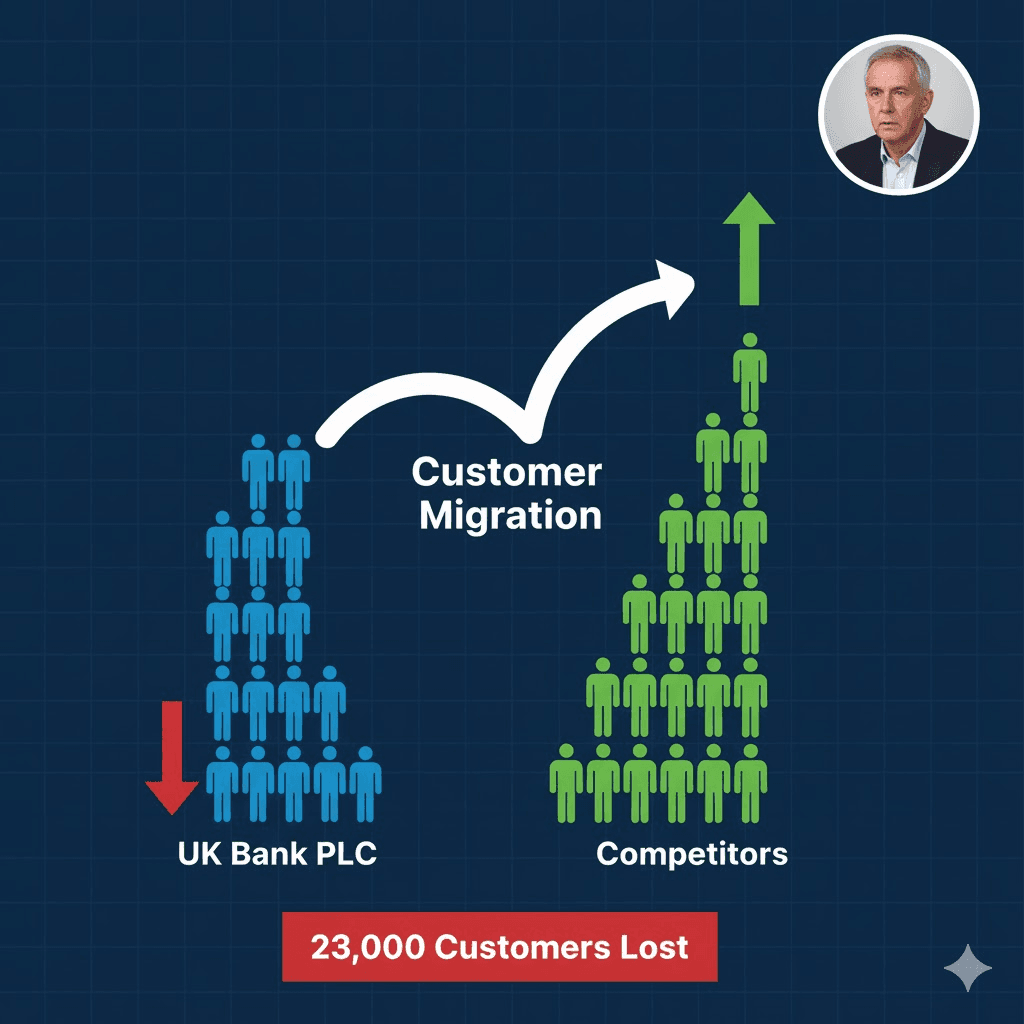
• A major UK bank has lost 23,000 customers to rival institutions in recent months.
• The shift reflects accelerating competition driven by digital-first banks and aggressive customer incentives.
• The banking sector is experiencing rapid transformation as consumers prioritize convenience, transparency, and lower fees.
• Market analysts warn that traditional banks may face deeper challenges if adaptation continues to lag.
Key Facts
• The loss of 23,000 customers occurred during a single quarter, marking one of the largest customer shifts for the bank in recent years.
• Mobile-first challenger banks are attracting large numbers of users through instant account opening, low-fee structures, and sleek digital experiences.
• Increased switching has been supported by the UK’s Current Account Switch Service (CASS), making it easier for customers to transfer accounts within seven days.
• Customer retention issues stem from rising service fees, slower digital innovation, and reduced branch networks.
Background
The UK banking sector has undergone major disruption over the past decade with the rise of challenger banks such as Monzo, Revolut, and Starling. Traditional banks, though still dominant, have been slower to modernize, often tied to legacy systems and vast branch networks that increase operating costs.
What it Means
The loss of 23,000 customers highlights the shifting preferences of modern banking customers. It signals that legacy banks must accelerate digital transformation, improve customer experience, and rethink pricing strategies.
For the financial services sector, this trend may intensify pressure on traditional banks to innovate or risk losing more market share.
Prime Highlights
• A major UK bank has lost 23,000 customers to rival institutions in recent months.
• The shift reflects accelerating competition driven by digital-first banks and aggressive customer incentives.
• The banking sector is experiencing rapid transformation as consumers prioritize convenience, transparency, and lower fees.
• Market analysts warn that traditional banks may face deeper challenges if adaptation continues to lag.
Key Facts
• The loss of 23,000 customers occurred during a single quarter, marking one of the largest customer shifts for the bank in recent years.
• Mobile-first challenger banks are attracting large numbers of users through instant account opening, low-fee structures, and sleek digital experiences.
• Increased switching has been supported by the UK’s Current Account Switch Service (CASS), making it easier for customers to transfer accounts within seven days.
• Customer retention issues stem from rising service fees, slower digital innovation, and reduced branch networks.
Background
The UK banking sector has undergone major disruption over the past decade with the rise of challenger banks such as Monzo, Revolut, and Starling. These digital-native institutions offer seamless app-based experiences that appeal to younger customers and tech-driven users. Traditional banks, though still dominant, have been slower to modernize, often tied to legacy systems and vast branch networks that increase operating costs.
What it Means
The loss of 23,000 customers highlights the shifting preferences of modern banking customers. It signals that legacy banks must accelerate digital transformation, improve customer experience, and rethink pricing strategies. For the financial services sector, this trend may intensify pressure on traditional banks to innovate or risk losing more market share.
Outlook & Consideration
The bank in question is expected to revisit its digital roadmap, potentially increasing investment in mobile services, automation, and personalized financial tools.
Analysts anticipate continued customer movement toward fintechs and online-only banks unless traditional institutions close the service gap quickly.
Key considerations for legacy banks include improved fee structures, stronger customer engagement, and hybrid physical-digital service models.
Prime Highlights
• A major UK bank has lost 23,000 customers to rival institutions in recent months.
• The shift reflects accelerating competition driven by digital-first banks and aggressive customer incentives.
• The banking sector is experiencing rapid transformation as consumers prioritize convenience, transparency, and lower fees.
• Market analysts warn that traditional banks may face deeper challenges if adaptation continues to lag.
Key Facts
• The loss of 23,000 customers occurred during a single quarter, marking one of the largest customer shifts for the bank in recent years.
• Mobile-first challenger banks are attracting large numbers of users through instant account opening, low-fee structures, and sleek digital experiences.
• Increased switching has been supported by the UK’s Current Account Switch Service (CASS), making it easier for customers to transfer accounts within seven days.
• Customer retention issues stem from rising service fees, slower digital innovation, and reduced branch networks.
Background
The UK banking sector has undergone major disruption over the past decade with the rise of challenger banks such as Monzo, Revolut, and Starling. These digital-native institutions offer seamless app-based experiences that appeal to younger customers and tech-driven users.
Traditional banks, though still dominant, have been slower to modernize, often tied to legacy systems and vast branch networks that increase operating costs.
The recent customer migration reflects broader industry trends, where consumers increasingly prioritize flexible digital access, better savings rates, and minimal charges.
What it Means
The loss of 23,000 customers highlights the shifting preferences of modern banking customers. It signals that legacy banks must accelerate digital transformation, improve customer experience, and rethink pricing strategies.
For the financial services sector, this trend may intensify pressure on traditional banks to innovate or risk losing more market share.
Outlook & Consideration
The bank in question is expected to revisit its digital roadmap, potentially increasing investment in mobile services, automation, and personalized financial tools.
Analysts anticipate continued customer movement toward fintechs and online-only banks unless traditional institutions close the service gap quickly.Key considerations for legacy banks include improved fee structures, stronger customer engagement, and hybrid physical-digital service models.
Looking ahead, the UK banking market will likely see heightened competition, more aggressive promotional campaigns.
Outlook & Considerations
The bank in question is expected to revisit its digital roadmap, potentially increasing investment in mobile services, automation, and personalized financial tools.
Analysts anticipate continued customer movement toward fintechs and online-only banks unless traditional institutions close the service gap quickly.
Key considerations for legacy banks include improved fee structures, stronger customer engagement, and hybrid physical-digital service models.
Looking ahead, the UK banking market will likely see heightened competition, more aggressive promotional campaigns, and further disruption driven by fintech innovation and customer expectations.
6/9
6/9
6/9
UK Bank Loses 23,000 Customers
UK Bank Loses 23,000 Customers
UK Bank Loses 23,000 Customers
Author: Rockson James
Author: Rockson James
Author: Rockson James
Date of writing: 22 November 2025
Date of writing: 22 November 2025
Date of writing: 22 November 2025
x
x

English
𐊾