

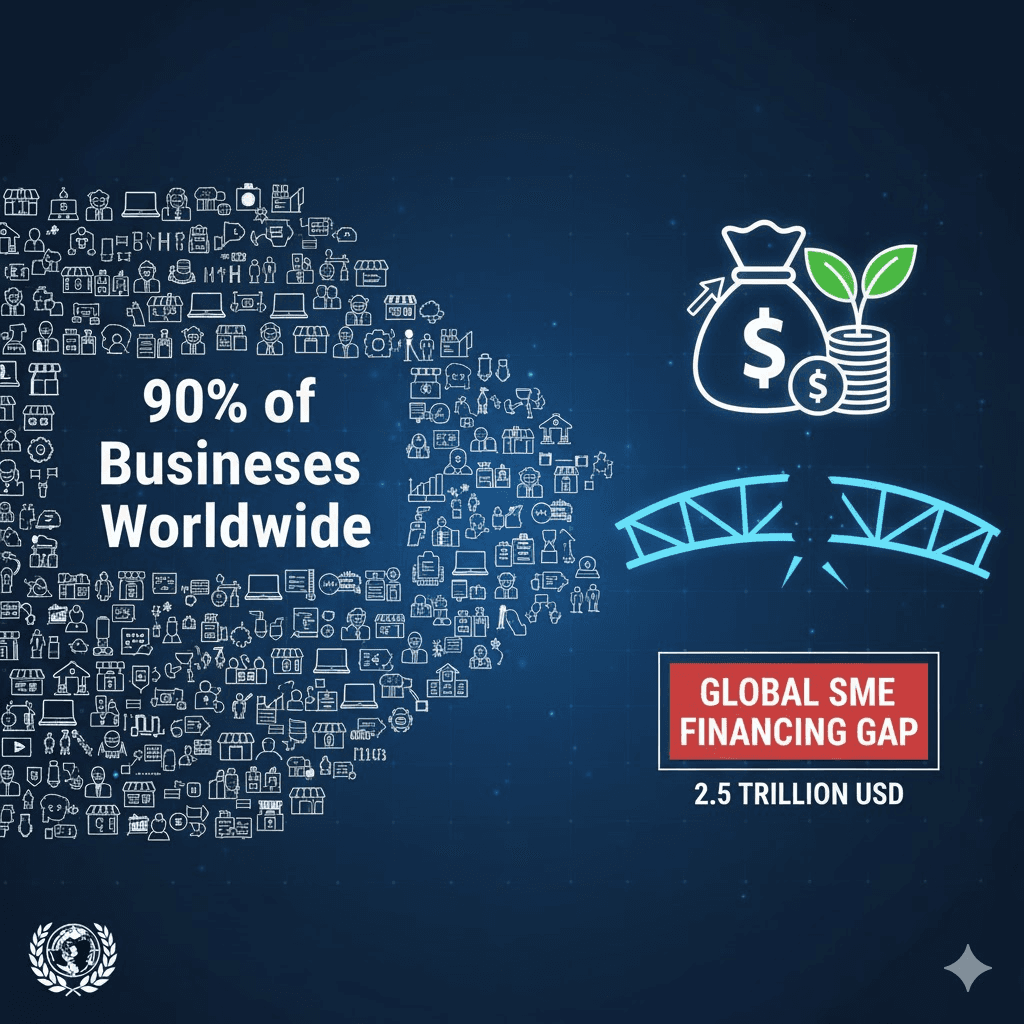

Prime Highlights
• The World Bank reports a continuing global financing gap for small and medium enterprises (SMEs).
• SMEs make up 90% of businesses worldwide but still struggle to access adequate credit.
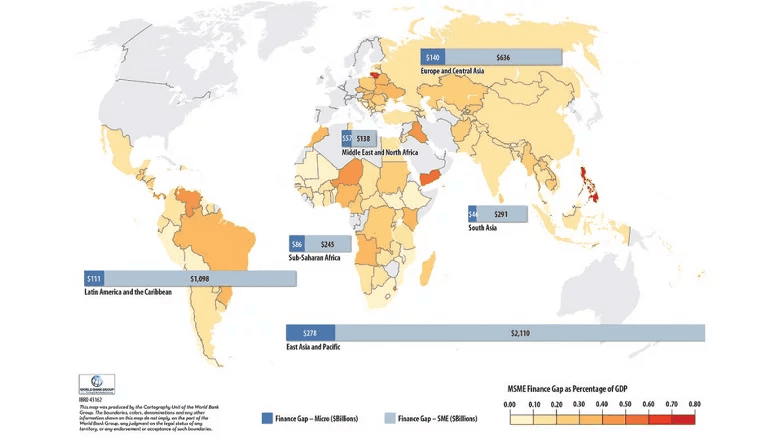
• Developing economies face the largest financing shortages, affecting growth and job creation.
• The report calls for stronger financial inclusion measures and digital lending frameworks.
Key Facts
• SMEs contribute over 50% of global employment yet face a financing shortfall exceeding trillions of dollars annually.
• In emerging markets, nearly 65 million businesses are either unserved or underserved by formal financial institutions.
• High collateral demands, complex loan processes, and inconsistent credit evaluations hinder SME borrowing.
• Digital lending platforms have grown rapidly but remain insufficient to close the global credit gap.
• Women-led businesses face an even larger financing barrier, according to the World Bank’s findings.
Background
Small and medium enterprises are the backbone of most economies, especially in Asia, Africa, and Latin America. Despite their significance, SMEs continue to face structural challenges in securing financial support for expansion, technology adoption, and working capital.
Traditional banking systems often prioritize large corporate borrowers, leaving smaller firms to rely on informal credit sources or high-interest private financing.
What it Means
The persistent SME financing gap limits economic growth, employment, and innovation worldwide. When SMEs lack access to credit, they struggle to scale, hire workers, or modernize operations—hindering national productivity.
Prime Highlights
• The World Bank reports a continuing global financing gap for small and medium enterprises (SMEs).
• SMEs make up 90% of businesses worldwide but still struggle to access adequate credit.
• Developing economies face the largest financing shortages, affecting growth and job creation.
• The report calls for stronger financial inclusion measures and digital lending frameworks.
Key Facts
• SMEs contribute over 50% of global employment yet face a financing shortfall exceeding trillions of dollars annually.
• In emerging markets, nearly 65 million businesses are either unserved or underserved by formal financial institutions.
• High collateral demands, complex loan processes, and inconsistent credit evaluations hinder SME borrowing.
• Digital lending platforms have grown rapidly but remain insufficient to close the global credit gap.
• Women-led businesses face an even larger financing barrier, according to the World Bank’s findings.
Background
Small and medium enterprises are the backbone of most economies, especially in Asia, Africa, and Latin America. Despite their significance, SMEs continue to face structural challenges in securing financial support for expansion, technology adoption, and working capital.
Traditional banking systems often prioritize large corporate borrowers, leaving smaller firms to rely on informal credit sources or high-interest private financing.
What it Means
The persistent SME financing gap limits economic growth, employment, and innovation worldwide. When SMEs lack access to credit, they struggle to scale, hire workers, or modernize operations—hindering national productivity.
For governments, the data underscores the need for targeted financial reforms, risk-sharing programs, and stronger credit guarantee schemes.
Outlook & Consideration
The World Bank expects digital finance, fintech lenders, and AI-driven credit scoring to play a significant role in reducing the global credit gap over the next decade.
However, regulatory support, transparent lending frameworks, and MSME-focused financial policies will be essential.
Policymakers must balance risk, encourage innovation, and ensure fair access to capital for small businesses—especially those in underserved regions.
Prime Highlights
• The Bangladesh Garment Manufacturers and Exporters Association (BGMEA) received a prestigious international honor in New York.
• The award recognizes BGMEA’s role in developing Bangladesh’s apparel sector into a global manufacturing powerhouse.
• The achievement highlights the industry’s progress in sustainability, worker empowerment, and global supply chain leadership.
Key Facts
• BGMEA represents more than 4,000 garment factories across Bangladesh.
• The apparel sector contributes over 80% of Bangladesh’s total export earnings.
• Bangladesh is the second-largest garment exporter in the world after China.
• The recognition emphasized BGMEA’s sustainability initiatives, including green factories and improved compliance standards.
Background
Founded in 1983, BGMEA has played a central role in shaping Bangladesh’s ready-made garment (RMG) industry. Over decades, the industry transformed from a small export sector into one of the world’s largest apparel hubs, supplying major global brands.
Following earlier challenges in safety and compliance, BGMEA has worked with international partners to raise labor standards, expand factory safety programs, and promote environmentally responsible manufacturing.
This recognition in New York reflects both the historical journey of the apparel industry and the reforms driving its modern identity.
What it Means
The persistent SME financing gap limits economic growth, employment, and innovation worldwide. When SMEs lack access to credit, they struggle to scale, hire workers, or modernize operations—hindering national productivity.
For governments, the data underscores the need for targeted financial reforms, risk-sharing programs, and stronger credit guarantee schemes.
Outlook & Consideration
The World Bank expects digital finance, fintech lenders, and AI-driven credit scoring to play a significant role in reducing the global credit gap over the next decade.
However, regulatory support, transparent lending frameworks, and MSME-focused financial policies will be essential.
Policymakers must balance risk, encourage innovation, and ensure fair access to capital for small businesses—especially those in underserved regions.
Looking ahead, closing the SME financing gap will be crucial for global economic resilience, sustainable job creation, and inclusive development.
Outlook & Considerations
The World Bank expects digital finance, fintech lenders, and AI-driven credit scoring to play a significant role in reducing the global credit gap over the next decade.
However, regulatory support, transparent lending frameworks, and MSME-focused financial policies will be essential.
Policymakers must balance risk, encourage innovation, and ensure fair access to capital for small businesses—especially those in underserved regions.
Looking ahead, closing the SME financing gap will be crucial for global economic resilience, sustainable job creation, and inclusive development.
5/9
5/9
5/9
World Bank Warns of..
World Bank Warns of..
World Bank Warns of..
Author: Sujal Hariom
Author: Sujal Hariom
Author: Sujal Hariom
Date of writing: 21 November 2025
Date of writing: 21 November 2025
Date of writing: 21 November 2025
x
x
English
𐊾